Mr. Tanaka
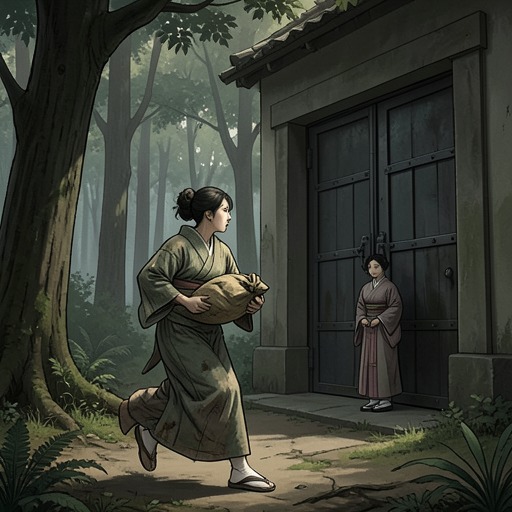
Memoirs of a GeishaMr. Tanaka is the man who brought Sayuri and her sister from their fishing village to Kyoto, an act that left Sayuri feeling betrayed. His brief reappearance at an exhibition becomes significant less for what he does than for what Sayuri sees: from a distance, she mistakes the Chairman for him, and the error briefly unsettles her memory and her certainty about whom she hates.
Identity and Background
Mr. Tanaka first enters this recollection through the contrast between his former and present selves. At the exhibition, Sayuri recognizes him among the hosts seated beside Nobu, but the man she sees no longer readily matches the figure she remembers. His gray hair and the graceful movement of his fingers strike her as unexpectedly soothing and distinguished. She cannot explain what has changed in him; the gap between her remembered Mr. Tanaka and the elegant man before her makes recognition feel uncertain rather than simple.
Recognition and Misrecognition
Walking toward the hosts, Sayuri sees a man from behind and experiences a sudden stillness. His presence evokes an image of him turning toward her in her village, and she first identifies the figure as Mr. Tanaka. Yet when he turns, she recognizes that the man is the Chairman. The scene carefully separates resemblance from identity: the Chairman’s folded eyelids and familiar face seem to carry the force of an older memory, but he is not the man Sayuri has been preparing to confront.
The mistaken recognition is shaped by the long interval since Sayuri last saw the Chairman. She has spent years imagining him from the brief encounter in her childhood, as if he were a song heard only in fragments and repeatedly rehearsed in her mind. When he appears, the remembered image does not quite match his actual features, but the soothing familiarity of his presence confirms him for her. Mr. Tanaka’s image surfaces in that same moment, binding the two men in Sayuri’s perception without making them interchangeable.
Resentment and Emotional Conflict
Before she realizes her mistake, Sayuri tells herself that she hates Mr. Tanaka. She imagines refusing the courtesy expected of an apprentice: rather than welcome him, she might spill sake on his leg or insult him with a pointed remark about the smell of fish. These imagined acts would turn her resentment into a public breach of manners, an attempt to make him feel the humiliation she associates with their past.
But the fantasies falter as she approaches. Mr. Tanaka appears distinguished, and the soothing quality of his movements interferes with the simple hatred she has rehearsed. Sayuri does not report that her resentment has vanished; instead, the scene holds resentment and involuntary recognition together. The remembered injury remains, while the man before her resists the fixed image she brought with her.
Narrative Significance
The scene gives Mr. Tanaka a presence through Sayuri’s recollection and anticipation rather than through any action of his own at the exhibition. Her imagined confrontation reveals that she still measures her past through the man she blames for taking her from home. Yet the interruption of that confrontation by the Chairman shows how memory can misdirect recognition: the past returns first as a familiar face, then resolves into someone else.
That distinction matters to Sayuri’s account of the Chairman. His appearance is not simply a reunion with a remembered benefactor; it is filtered through years of imagination and through the earlier rupture associated with Mr. Tanaka. The moment makes the Chairman’s familiarity feel both deeply personal and difficult to separate from the histories that brought Sayuri to Kyoto.